
You Were Never Weak — You Were Bound
A Latin word, a Roman slave, and what they reveal about breaking free from sugar

There is a Latin word — addīcere — that most people have never heard, yet it quietly lives inside one of the most loaded words in modern life: addiction.
I first heard about this meaning from my mentor, Bitten Jonsson — a pioneer in the field of sugar addiction. I looked it up in Slaying the Dragon: The History of Addiction Treatment and Recovery in America by William L. White,1 and I think it helped me because it gave me insights that I use in my recovery. I hope these insights will be useful for you too.
In ancient Rome, addīcere was a legal term. It meant to be formally handed over — by a judge’s declaration — to a creditor. The addictus was a debtor who had lost. He was now bound to another. Not by choice. Not by weakness. By circumstance, by debt, by a system larger than himself.
It’s not just my history and my biology, it’s also my circumstances.
I have been thinking about this for a long time. Because I know, from the inside, what it is to be bound. And I know now, in an imperfect way, what it is to be free.
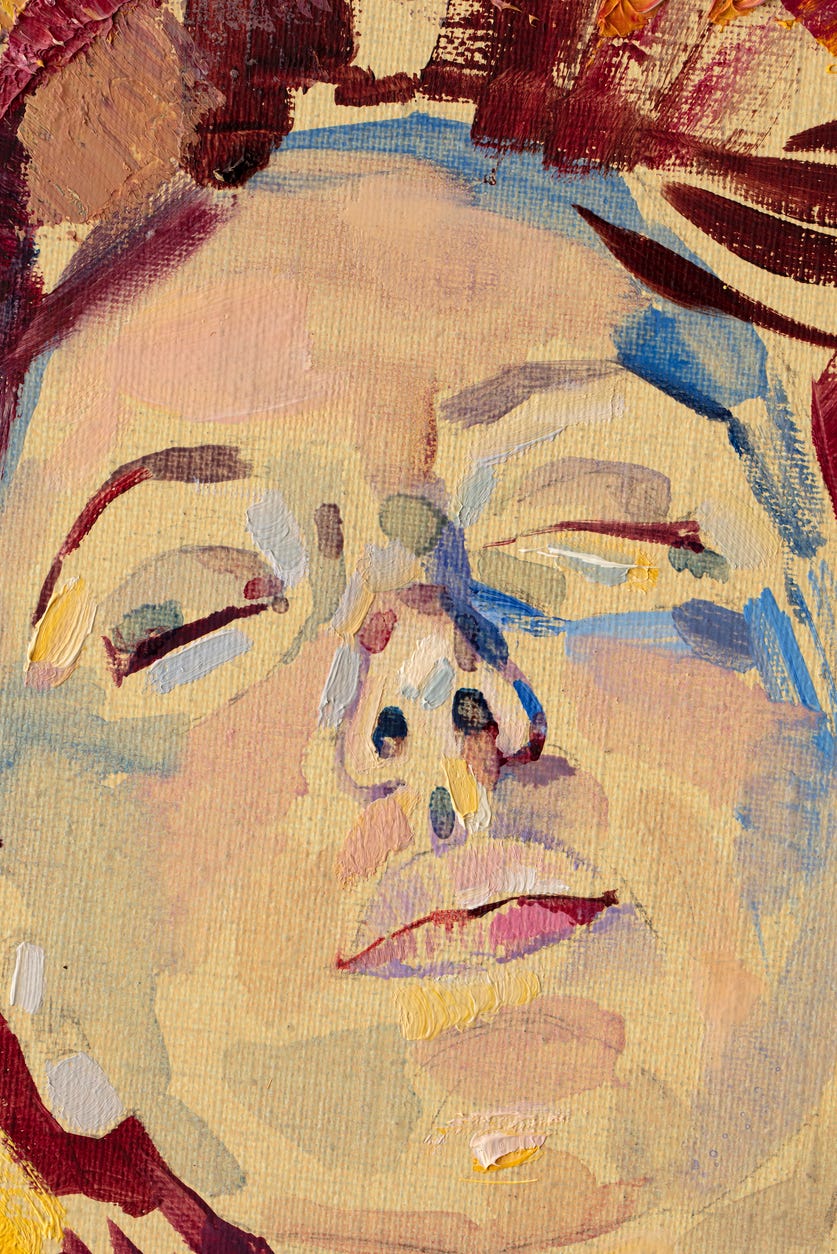
We All Have More Than One Owner
Here is something that took me years to understand: we are never owned by just one thing.
We are bound to the people we love. To the routines that contain us. To the substances that comfort us. To the emotional climates we grew up in. To the identities we have carried so long we have forgotten we chose them. To the societies that normalise our chains and dress them up as rewards.
It is only when one of those owners disappears that we feel the full weight of all the others.
And I have yet to meet an addict with just one addiction.
Enter Epictetus
Around 50 AD, a boy was born into slavery in what is now Turkey. His name was Epictetus — which means, in Greek, simply “acquired”. Owned.
He was brought to Rome. At some point his master broke his leg, reportedly to test his endurance. Epictetus is said to have warned him calmly that the leg would break — and when it did, simply observed that he had said so.
He went on to become, in my opinion, one of the greatest philosophers who ever lived.
Freed eventually, then expelled from Rome by Emperor Domitian, he settled in Greece and opened a school. He wrote nothing himself — everything we have was recorded by his devoted student Arrian. But what he taught was revolutionary in its simplicity:
Some things are up to us. Some things are not. Know the difference.
He called this the dichotomy of control. Our circumstances, our bodies, what others do, what the world hands us (that driver who cuts us up in traffic) — not up to us. Our judgements, our responses, our choices about what we give our attention to (our hands on the steering wheel) — those, and only those, are ours.
The man who was literally, legally addictus — handed over, owned — built an entire philosophy of inner freedom.
What Bondage Actually Looks Like
My addiction to chocolate had always been there — humming quietly in the background, manageable, contained. What I did not know was that it was contained, in part, because I had another owner who was also holding me.
My husband.
When he died, that owner was gone. And my nervous system — still needing regulation, still searching for comfort — turned, with renewed ferocity, to the one thing that had always been there.
And as I have come to understand — any product with an entire supermarket aisle dedicated to it has serious addictive potential behind it. Decades of food science, flavour engineering, and marketing have seen to that. Chocolate is not just a treat. For many of us, it is a drug with very good PR.
My enslavement grew.
I hid it — from myself and from others — once discovering a substantial stash I had secreted away in my office, and I remember the glee I felt at finding it, as though I had stumbled upon buried treasure.
I would tell myself: just three squares. Savour them. Three became six. Six became twelve. Twelve became the entire family-size bar. Again.
And all the while, the world kept telling me this was fine. More than fine.
Chocolate is good for you. Dark chocolate, antioxidants, the studies. Chocolate is love. The Valentine’s displays, the Easter mountains, the gift boxes, the celebration cakes. Chocolate is comfort. Of course it is. Of course you deserve it. You’ve had a hard time.
Chocolate is sanctified in our society. Which makes it one of the most insidious substances to try to break free from — because your bondage is dressed up as a reward, and the whole world is handing you the chains and calling them a gift.2
What I Told My Angel
A few months before I reached my lowest point, I was on a call with an ex New York dominatrix and Taoist Nun initiate, Kasia Urbaniak — a teacher of women’s empowerment — who led us through a deep guided meditation.3
I settled into the meditation. I let myself imagine. I thought of what I loved most in the world at that time.
And it was chocolate.
So I told my angel — and later, when invited, I told Kasia and the whole group — I want to be a chocolate connoisseur. I want to travel the world and find the best chocolate that there is and taste and delight in it all.
I meant it completely. In that moment, it was the truest thing I knew about myself.
About two months later, I found myself walking back and forth to the fridge like a robot. Unable to stop. Not even fully wanting to. Just compelled — back and forth, back and forth — helpless in a way I had not quite been before. I was not just bonded over. I was totally enslaved.
This is what addiction does at its most complete. It does not just take your habits. It does not just take your body. It colonises your desire. It moves into the place where your deepest wishes live — the place you would speak from if an angel asked you your heart’s mission — and sets up home there. It convinces you that it is what you love most.
That is a deeper bondage than the Roman courts ever imagined. It is, in the truest sense, Stockholm syndrome — where the captive has so completely identified with the captor that the chains feel like preferences, and the cell feels like home. You don’t even know you’re a prisoner. You think this is just who you are. What you love. What you would tell your angel.
The Power of Surrender
I want to say something about the moment of surrender — because I think it is one of the most misunderstood moments in any recovery.
We imagine it should be dramatic. A rock bottom that looks like a film scene. An intervention. A crisis that forces the hand.
Sometimes it is. Often it is not.
Sometimes it is just a fridge. At some unremarkable hour. Walking back and forth. Not even enjoying it anymore. Just compelled. And then — a stillness. Something in you that says, quietly and clearly: I cannot do this anymore.
The word surrender comes from the French surrendre — to give back, to hand over. Which brings us all the way back to addīcere. To be handed over.
Except this time, you are the one doing the handing.
That is the difference between bondage and recovery. In bondage, something outside you hands you over. In surrender, you make the declaration. You become your own judge. You hand yourself over not to the substance, but to the possibility of freedom.
It looks like weakness. It is the first act of genuine self-ownership in a very long time.
The Rupture That Broke Me Open
The same event that deepened my bondage to chocolate — my husband’s death — eventually became the window of my escape — because it forced me to change.
Not immediately. For a long time the rupture just broke things. Grief does that. It blows the roof off whatever was being quietly contained, and for a while all you can do is stand in the wreckage.
But grief also, eventually, demands something of you.
I had to learn to step in more, not less. To live with discomfort rather than reaching past it. To feel the fear and do it anyway. Lockdown gave me something I hadn’t expected: time to learn. And slowly, one new habit at a time, each one laying a plank in a new foundation, I began to build.
It started with self-acceptance — the hardest and most foundational habit of all. Accepting that the old structure was gone and I was the one who had to build a new one. I found new voices, new mentors, new rooms of people telling the truth about their lives.
The shift away from chocolate did not happen overnight. About eighteen months after my husband’s death I arrived at a clarity I had not had before: I was powerless over it. Not weak. Not lacking. Powerless. And the only way through was a radical change — cutting out chocolate, sugar, and flour entirely. Abstinence. Not as punishment. As emancipation.4
I Can't Do It Alone
I tried to do this on my own. I tried and tried and tried. And as much as my self reliant attempts to manage worked for a while, they always ended with me back in a cupboard looking for something to take away the pain.
To recover, I have had to find others who have recovered — and listen to them. Not necessarily recovered chocoholics or sugar addicts. Anyone with recovery. Anyone who has been to the bottom of their own particular bondage and found a way to live differently — however imperfectly — and speak about it.
And with that I feel there is no hierarchy of addiction. No respectable suffering and shameful suffering. No clean ones and broken ones. The workaholism that looks like ambition. The people-pleasing that looks like kindness. The obsessive thoughts or ultra-sports that never get named as addiction at all. The unhealthy relationship or the healthy one. We are all, in some configuration, bound. The question is only whether we have yet found our way to a room or a book where people tell the truth about some part of it and how we connect with that person’s experience.
Connection may not be the cure for addiction, but it can soften it, soothe it, and reduce the need for relief.
An Emancipated Slave
Since my husband died, I have carried a feeling I did not have a name for until recently.
The feeling of being an emancipated slave.
It is not a simple feeling. Emancipation is not a clean liberation — it is terrifying and disorienting and lonely, especially when the owner was also the person you loved. The creditor was also your home.
And yet.
Epictetus was emancipated and went on to teach the world about freedom. Not because emancipation was easy. But because it forced him inward — to the only territory that had ever truly been his.
I think that is what loss does, when we let it. It strips away the external owners — the people, the structures, the comfortable arrangements — and leaves us standing in a clearing, realising that we are still here. That something in us was never owned at all.
Chocolate was consuming me. My husband’s love had nourished me. Grief was the fire that — eventually, painfully, slowly — helped me tell the difference.5
A Gentler Way to See Ourselves
If you are reading this and you recognise something of your own story — the aisle, the hiding, the sneaking, the lying, the sense that a substance, or behaviour, or person, or process, or altered mind state, has claimed a place in you that should belong to something else — I want to offer you this:
You are not weak. Perhaps you are bound.
Bound by biology, by loss, by a culture that sanctifies your chains, by a nervous system doing exactly what nervous systems do when they are frightened and grieving and looking for regulation anywhere they can find it.
The addictio is not your fault.
And the surrender, when it comes — whether dramatic or quiet, whether in a crisis or in an ordinary kitchen at an unremarkable hour — is not defeat. It is the most powerful thing you can do. It is the moment you stop handing yourself over to the substance and begin, for the first time, to choose.
You do not need to be ready. You do not need to be healed or optimised. You need one voice that tells the truth. One room. One new habit. One morning that is slightly different from the last.
The ball, once it starts rolling, rolls.
And there is a path to freedom.
(you’re on it already)
“Make the best use of what is in your power, and take the rest as it happens.” — Epictetus
Sugar Free Minds explores the intersection of neuroscience, philosophy, and everyday freedom from sugar, chocolate, alcohol… well all addictions really.
Thank you for being here.
— Charlotte
Slaying the Dragon by Willian L. White is an excellent book that looks into the history of addiction recovery in America. Sadly it’s out of print. But you can read it for free on the Internet Archive here.
If you see yourself in any of this — with chocolate, or any other substance or behaviour — you are not alone. These are the signs of how any substance or behaviour shifts from something within our control to something outside of it. For more information on problems relating to sugar and chocolate addiction, visit my website sugarfreeminds.com or Bitten Jonsson’s website bittensaddiction.com
And I’m certainly not saying everyone has to give up chocolate or be in any kind of food addiction recovery or addiction recovery at all. But if you do want to surrender, and get support from others who’ve surrendered, that communities exists (imperfectly) but they are there with open doors — some resources are linked in footnote 5.
I recommend her book to all my women friends — and men too if they want to better understand the women in their lives. Appropriately called Unbound: A Woman’s Guide to Power. An affiliate link to purchase via independent bookshops.
For me, chocolate was always with sugar and usually with flour. And my chocolate use was intertwined with food use in general. And although it was radical, for me I felt it was a necessary step to regain my sanity. And slowly along the way I’m learning about other substances and behaviours and coping mechanisms I have to be mindful of — or put down all together. Abstinence and self binding can both be useful tools. Addictions is slippery. Recovery isn’t a once and done thing. It’s like laundry.
I can see how for some, this could easily be the other way around. It could have been an unhealthy attachment to a person and a healthier relationship with a food. The balance is what my system got used to. I’ll try and expand on this concept in a future article. But for now I recognise that I need help and support from different places. To help understand I’m not alone. And I need to support my system with a lot of different recovery skills and habits to stop me turning to more dopaminergic substances and behaviours when I need relief or comfort.
I’m preparing a list of resources for my website I’ve linked it here. If you have any others — please feel welcome to share. The document is free and hosted on my Google Drive — no sign up or sign in required.